At the mouth
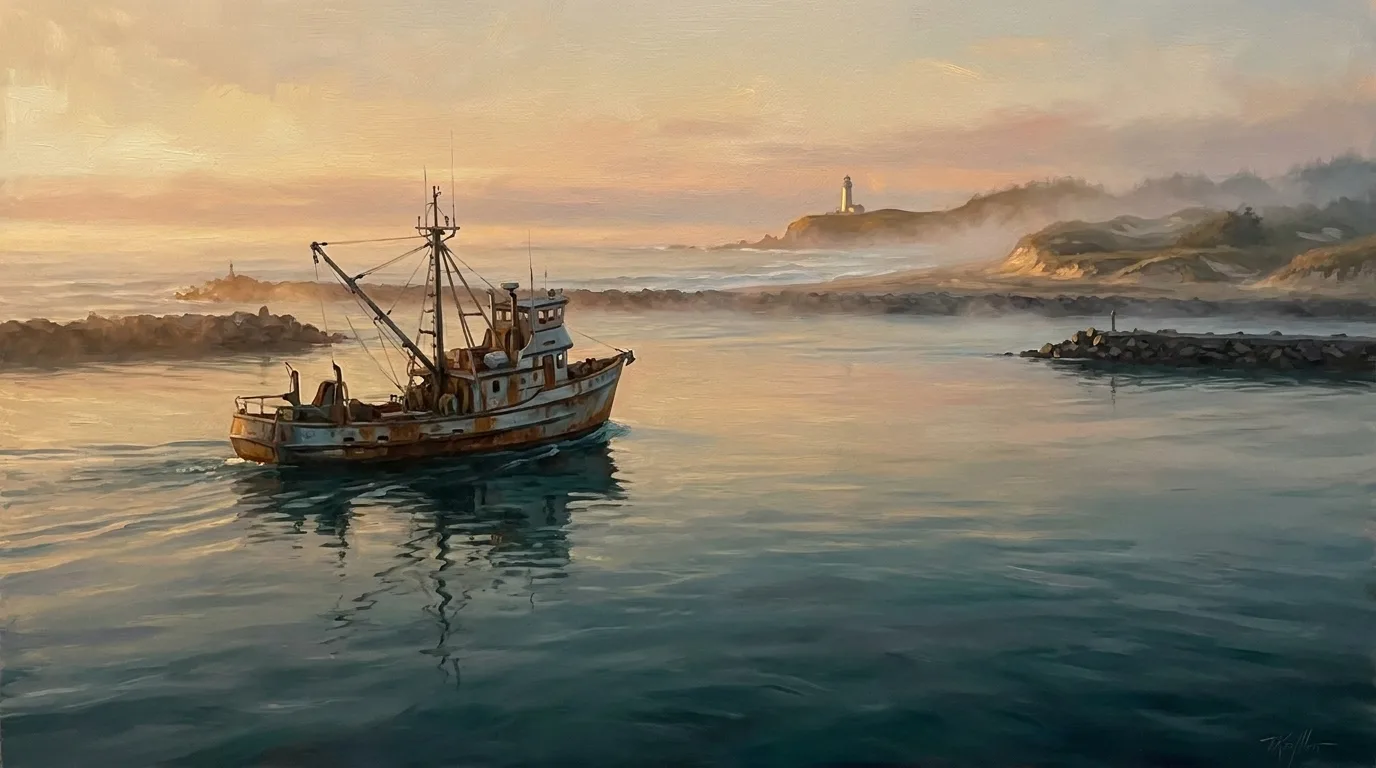
Before dawn, a boat idles at the mouth of Yaquina Bay and waits for the water to tell the truth.
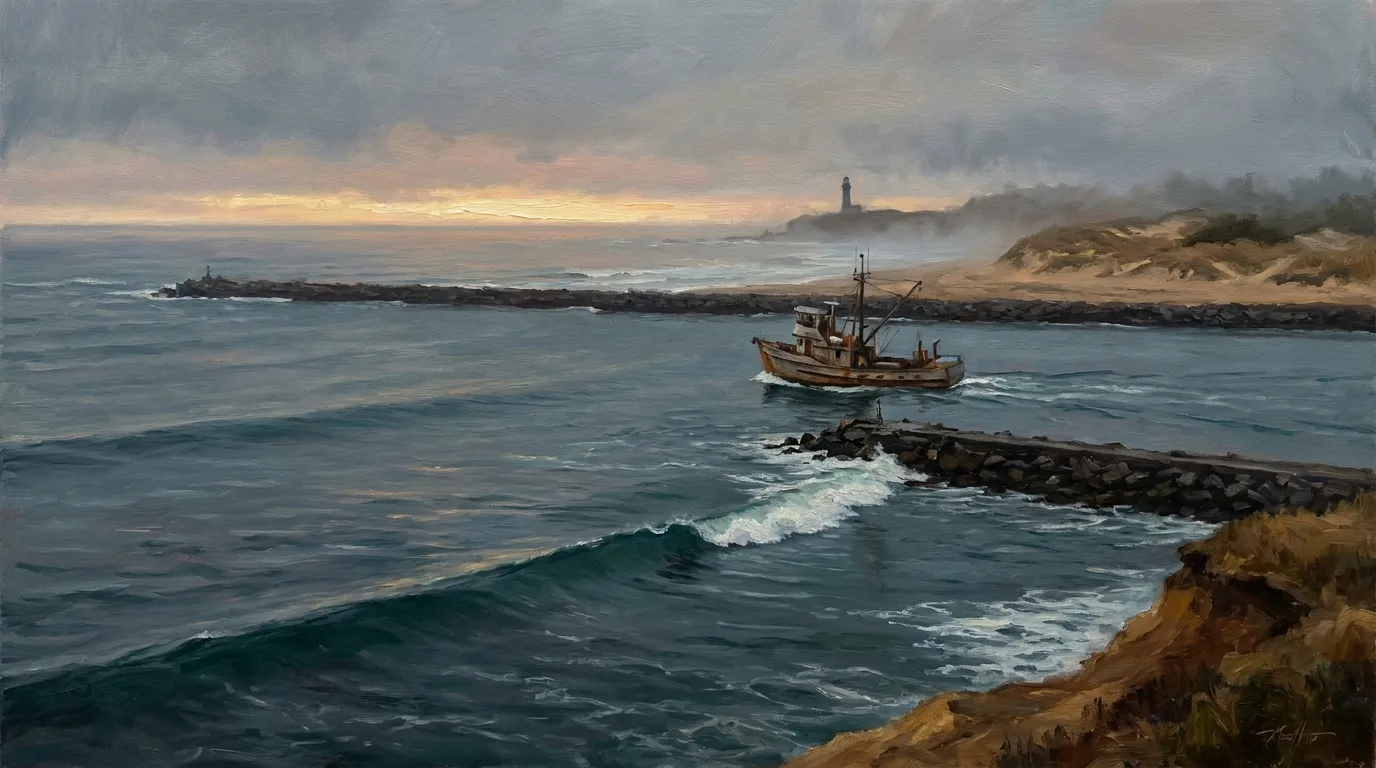
This is the bar: the shoal where the bay empties into the open Pacific, between two long rock jetties that pinch the channel down to a single line of choices. In summer the swell runs roughly parallel to the coast and the bar lies comparatively smooth. In winter the heavy west swell stands it up and the bar turns very rough, so even a big boat waits for a smooth bar and a favorable tide before it dares to leave.1
The skipper has read this entrance for twenty years. Out before light, back on the tide, most of the days of his life. He has watched ten thousand swells roll under the hull and do nothing at all. He is waiting for one wave only: the one that means it.
Not every wave is your problem. The trouble is reading the one that is.
What the bar does
Why the crossing kills
A coastal bar is where the deep ocean meets the shallow water at a river's mouth, and most of the people who die on one die the same way: the boat capsizes.2
What kills is the state of the water. When the tide runs out hard against an incoming swell, the seas stand up steep and break, and a strong ebb can wreck a small boat on a day that looked calm from the dock.2
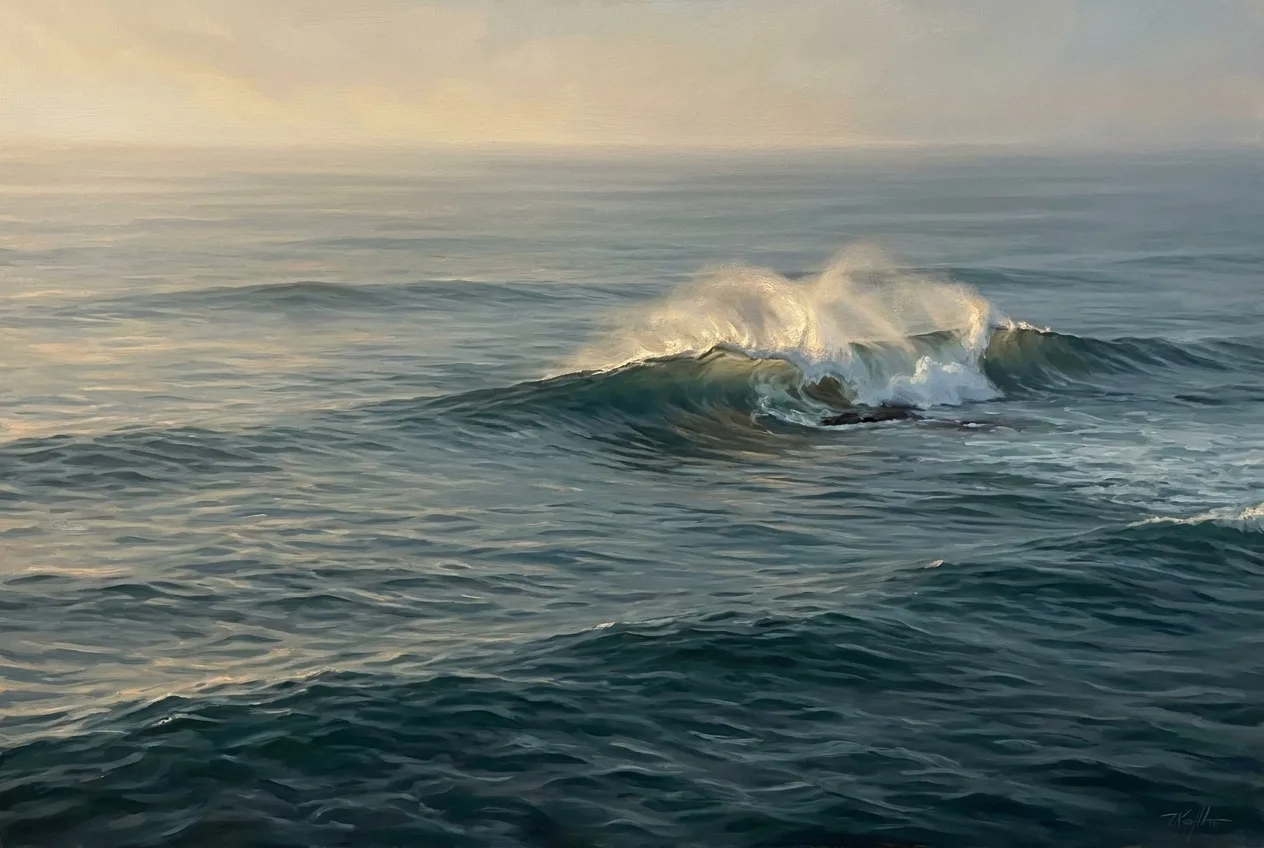
Yaquina keeps a worse trick over its reef. A single large swell from seaward can throw up a tremendous breaker there with little or no warning, even when the sea around it is otherwise calm.2 One wave. No warning. The whole quiet ocean, and then the thing that kills you.
The fleet
Boats that read instead of run
So the fleet reads the bar, not the horizon. Newport works one of the busiest fishing ports in the country. Its boats landed about 59 million dollars of catch in 2019, first among Oregon ports and fourteenth in the nation, with more than four of every ten of those dollars in Dungeness crab.3 Three hundred and thirty-one boats, average length forty-eight feet, crossing that same mouth.3 By value, Newport and Astoria sit among the top three ports on the entire West Coast.4 None of it reaches open water without someone reading the bar first.
The turn
An immunologist says the body does this too
Hold that picture: a skipper who does not flinch at the foreign, only at the dangerous. In 1994 an immunologist named Polly Matzinger said the body works the same way.
For a century, immunology taught that the immune system sorts the world into self and non-self and attacks whatever is foreign. Matzinger broke with that. The immune system, she argued, does not care about self and non-self; its primary job is to detect and protect against danger.5 Eight years later, in Science, she put it flat: the system is more concerned with things that do damage than with things that are merely foreign.6
The old model could not explain the quiet cases. A mother carries a fetus that is half-foreign, and her body does not attack it. We inject vaccines made of foreign protein and get almost nothing back until we add an irritant that does a little damage.6 The reverse runs just as wrong: the body often fails to reject a tumor, even when its own cells fly new, mutated proteins like a strange flag.6 The alarm answers to harm.
The immune system is more concerned with entities that do damage than with those that are foreign. Polly Matzinger · Science · 2002
The mechanism
How a cell rings the bell
A cell sounds the alarm by dying the wrong way.
A cell that dies on schedule is folded up and carried off before it leaks, and it says nothing.7 A cell torn open by injury spills its insides into the tissue, and those spilled contents are the signal.7 Immunologists call them danger signals, or DAMPs: molecules such as HMGB1, uric acid, and ATP that belong locked inside a living cell and mean trouble the moment they show up outside one.8 An orderly death stays quiet. A violent one breaks, and the break is the warning, the same way a swell is only water until it stands up and breaks over the reef.
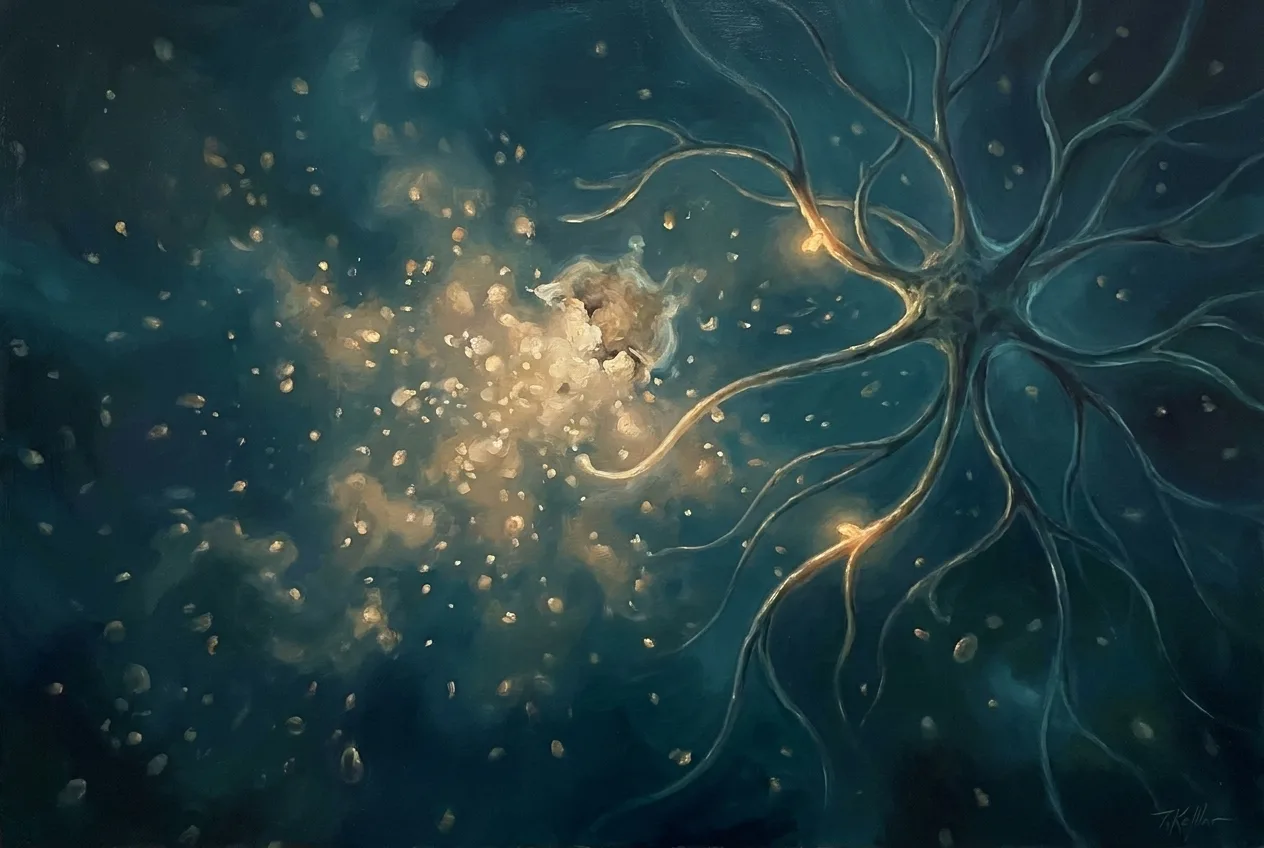
The lookouts are sentinel cells called dendritic cells. They drift through the tissue feeling for these signals. Catch one, and they wake, mature, and call up the wider response, both the fast innate reaction and the slow, specific adaptive one.79 Ten thousand harmless molecules drift past them and nothing happens. They are reading for damage.
The economy of alarm
The alarm that fires for the right reason
The useful alarm is the one that fires for the right reason.
A green deckhand reacts to every whitecap and is useless by noon. The veteran spends most of the crossing doing nothing, because nothing is what most of the water has earned; he saves his whole attention for the break that means it. The body runs on the same economy. React to everything and you get autoimmunity, a body at war with itself; react to nothing and the pathogen wins. The danger signal is how a living system spends its alarm well.
The response even comes in grades. When the Yaquina bar turns, the Coast Guard does not wave everyone off at once; a rough-bar restriction holds the small boats back first, and only the worst water closes the bar to all of them.210 An immune response escalates the same way, matched to how much damage the signal reports.
And the reading happens at the edge. The skipper decides at the bar, on what the water in front of him is doing, without waiting on a verdict from a distant office. That is the principle behind the Mendozian Framework's danger-signal approach to immune monitoring: an alarm that is interpretable, because it fires for a reason you can name, and edge-capable, because the reading happens at the bar, in the moment, where the danger actually is.
The reader
She reads danger her own way
Matzinger came to this honestly. She says the two main ideas of the danger model arrived in a bath and in a field while she was herding sheep.11 She trains border collies. Years earlier she had listed her Afghan hound as a co-author on a real paper in the Journal of Experimental Medicine,12 and once that was discovered, the journal barred her work until the editor died and a new one took his place.13 A person who reads danger for a living, and reads it her own way.
The boat comes back on the evening tide and slides into still water, the bar quiet behind it. The skipper could not give you the math of swell period and ebb velocity. He could tell you exactly where to look. So could a dendritic cell, if it could talk.
Long before there was a Coast Guard, before there was a chart, life had already learned the oldest rule of the bar. Do not fear the foreign. Watch for the wave that breaks.